
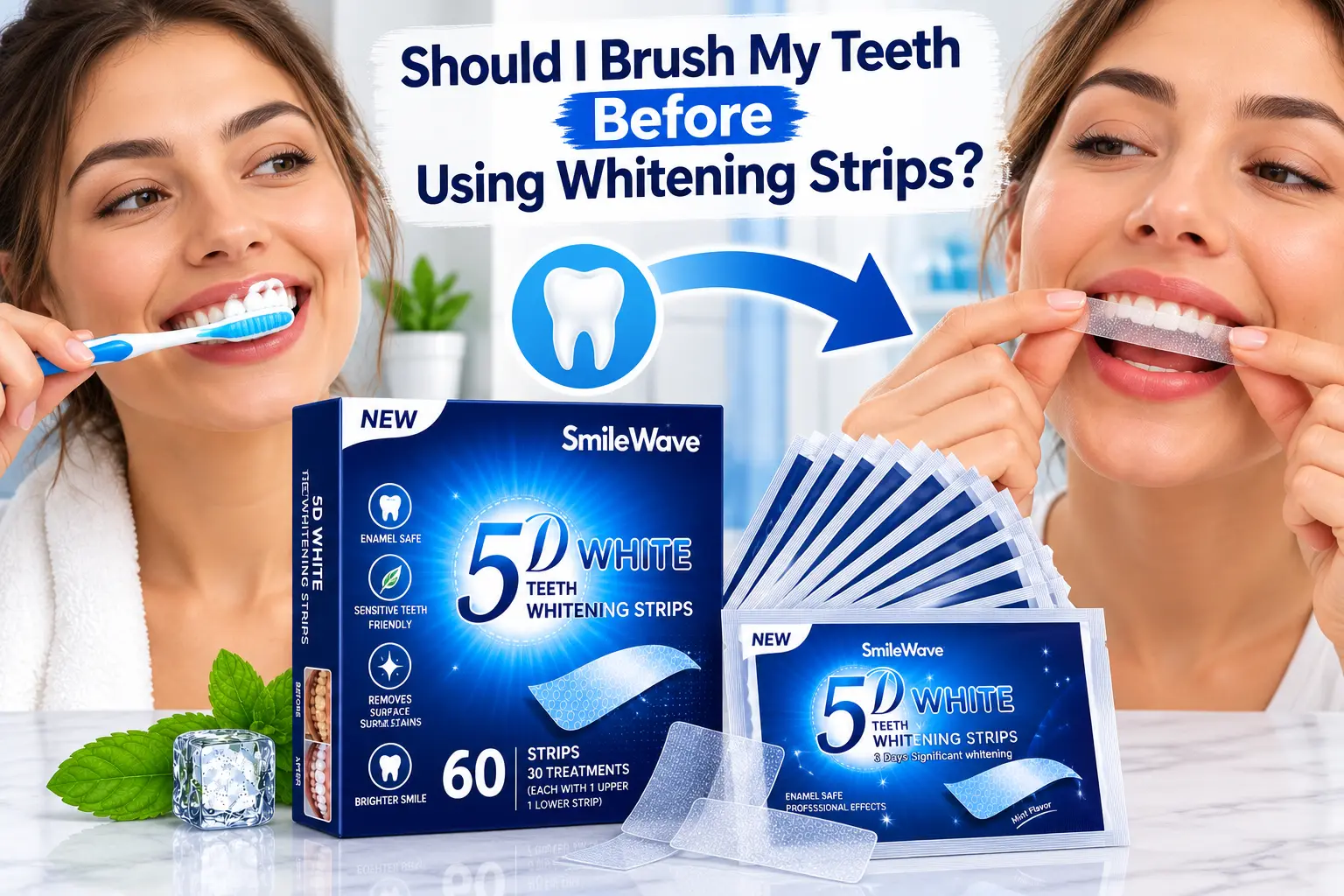
Should I Brush My Teeth Before Using Whitening Strips?
If you are planning to use teeth whitening strips, you may be wondering whether you should brush your teeth before applying them. Brushing helps remove food particles and plaque, but the timing can matter when using whitening products.
Some dental guidance recommends brushing before whitening treatment, while certain whitening-strip manufacturers advise against brushing immediately before application because it may irritate the gums.
The best approach is to follow the instructions provided with your specific whitening strips. Brushing earlier may help clean your teeth, but you should avoid aggressive brushing immediately before treatment.
In this guide, we explain when to brush, how long to wait, what to do after removing whitening strips, and how to use them more carefully.
Should You Brush Your Teeth Before Using Whitening Strips?
Brushing your teeth before using whitening strips can help remove food particles, plaque, and surface debris. However, it is important to consider when you brush.
Some dental guidance suggests brushing approximately 20–30 minutes before applying whitening strips. Other product instructions advise against brushing immediately before treatment because brushing can temporarily irritate the gums.
These recommendations are not necessarily contradictory: brushing earlier and brushing immediately before application are different situations.
For a safer routine, keep these points in mind:
- Brush gently: Use a soft-bristled toothbrush and avoid aggressive scrubbing.
- Allow time between brushing and whitening: If you brush beforehand, follow the waiting-time instructions provided with your whitening product.
- Follow the product directions: Preparation and application instructions can vary between brands.
- Avoid irritated gums: Do not apply whitening strips to sore or irritated gums.
There is no single waiting time that applies to every whitening-strip product. Check the instructions for your particular product rather than assuming that a 20–30-minute wait is always necessary.
How Long Should You Wait After Brushing Before Using Whitening Strips?
The appropriate waiting time depends on the whitening-strip product you are using.
Some dental guidance recommends waiting around 20–30 minutes after brushing before applying whitening strips. However, you should not treat this as a universal rule because manufacturers may provide different preparation instructions.
If you plan to use whitening strips in the evening, you could brush earlier rather than immediately before treatment, provided this is consistent with the product directions.
If your gums feel irritated after brushing, wait until they feel comfortable and reconsider using the whitening product. If you regularly experience gum irritation or tooth sensitivity, consult a dentist before starting treatment.
Should You Brush Your Teeth After Removing Whitening Strips?
Whether you should brush immediately after removing whitening strips depends on the product’s instructions.
Some products allow gentle brushing or rinsing to remove leftover gel, while others provide specific aftercare directions.
Follow these precautions:
- Remove the strips at the recommended time.
- Follow the package directions for removing any remaining whitening gel.
- If brushing is permitted, use a soft-bristled toothbrush and brush gently.
- Avoid aggressive brushing if your teeth or gums feel uncomfortable.
- Do not leave whitening strips on longer than recommended.
If you experience significant tooth sensitivity or gum irritation after treatment, stop using the product. Seek advice from a dentist if the symptoms persist or are severe.
How to Reduce Tooth Sensitivity and Gum Irritation
Some people experience temporary tooth sensitivity or gum irritation when using whitening products. These precautions may help reduce discomfort.
1. Use a soft-bristled toothbrush
A soft-bristled toothbrush can help you clean your teeth without unnecessary scrubbing. Brush gently, particularly around the gumline.
2. Follow the recommended treatment time
Do not leave whitening strips on longer than the instructions recommend. Extending the treatment time does not guarantee better results and may increase the risk of discomfort.
3. Use the strips only as directed
Follow the recommended application time and frequency. Do not use additional strips or repeat treatments more often than instructed.
4. Stop if irritation develops
If you experience significant tooth sensitivity, gum irritation, or pain, stop using the product. Consult a dentist if symptoms persist or are severe.
5. Check with a dentist when necessary
If you have cavities, gum disease, damaged teeth, or existing dental work, ask a dentist whether whitening strips are appropriate for you.
Whitening strips may not change the colour of crowns, veneers, fillings, or dentures in the same way they affect natural teeth.
How to Use Teeth Whitening Strips Correctly
The exact application process varies by brand, so always read the product instructions first. The following steps provide a general overview.
Step 1: Read the instructions
Check the packaging for application time, recommended frequency, warnings, and instructions about brushing before treatment.
Step 2: Prepare your teeth
Follow the manufacturer’s guidance on whether to brush beforehand and whether you should wait before applying the strips.
Step 3: Apply the strips carefully
Position the strips according to the package directions. Avoid placing the whitening material unnecessarily against your gums.
Step 4: Follow the recommended treatment time
Use the strips for the specified duration. Do not extend the application time in an attempt to achieve faster results.
Step 5: Remove the strips properly
Remove them as directed and follow the instructions for rinsing or removing any remaining gel.
Step 6: Monitor your teeth and gums
Pay attention to any discomfort after treatment. Stop using the strips if you develop significant irritation or sensitivity.
Never swallow whitening strips or their gel. Keep them away from young children and store them according to the manufacturer’s instructions.
Are Teeth Whitening Strips Suitable for Sensitive Teeth?
That depends on the product and the cause of your sensitivity.
Some whitening strips are marketed for people with sensitive teeth, but this does not guarantee that they will be comfortable or suitable for everyone.
Before choosing a product, review its ingredients, warnings, and instructions. Marketing descriptions such as “gentle” or “enamel-safe” should not be treated as a guarantee that a product is appropriate for every person.
If you regularly experience tooth pain, sensitivity to hot or cold drinks, or gum problems, consult a dentist before starting a whitening treatment.
Considering SmileWave Teeth Whitening Strips?
If you are comparing at-home whitening options, you may want to explore SmileWave Teeth Whitening Strips, available in a pack advertised as 60 strips for 30 treatments.
Before buying, review the current product listing and packaging to confirm the ingredients, application instructions, treatment time, warnings, and suitability for your needs.
Do not assume a whitening product is suitable for sensitive teeth simply because its listing uses that description. Always follow the manufacturer’s instructions.
Check SmileWave Teeth Whitening Strips on Amazon
Compare the product details before making a decision. If you have existing dental problems or are unsure whether whitening strips are right for you, consult a dentist.
Frequently Asked Questions
Should I brush my teeth before using whitening strips?
Brushing beforehand may help remove food particles and surface debris. However, avoid brushing immediately before application unless your product’s instructions specifically recommend it. Some manufacturers advise against immediate brushing because it may irritate the gums.
Can I wait 20–30 minutes after brushing before using whitening strips?
Some dental guidance recommends this waiting period, but it is not a universal requirement for every product. Follow the instructions supplied with your whitening strips.
Can I use whitening strips without brushing first?
Follow the preparation instructions for your specific product. Maintain your regular oral hygiene routine, but do not assume you must brush immediately before applying whitening strips.
Can I brush my teeth immediately after using whitening strips?
Some products allow gentle brushing, while others provide different aftercare instructions. Check the packaging and avoid aggressive brushing if your teeth or gums feel uncomfortable.
Do whitening strips damage enamel?
The risks depend on the product, its ingredients, how it is used, and the condition of your teeth. Incorrect or excessive use may increase the risk of sensitivity or irritation. Follow the directions and ask a dentist if you have concerns.
Can I use whitening strips if I have sensitive teeth?
Some products are marketed for sensitive teeth, but they may not be suitable for everyone. If you already have significant sensitivity or gum problems, consult a dentist before using whitening strips.
How long should I leave whitening strips on?
The recommended application time varies by product. Follow the directions on your package and never leave strips on longer than recommended.
Final Thoughts
So, should you brush your teeth before using whitening strips? Brushing earlier may help remove food particles and surface debris, but brushing immediately before application may irritate your gums.
The best approach is to brush gently, follow the instructions for your particular whitening-strip product, and avoid aggressive brushing around treatment time. There is no single waiting period that applies to every brand.
Choose whitening products carefully, use them only as directed, and speak with a dentist if you have sensitive teeth or existing dental problems.
This article is for general educational purposes only and is not a substitute for professional dental advice.
Affiliate disclosure: This article may contain affiliate links. If you purchase through an eligible link, we may earn a commission at no additional cost to you.



Add comment