
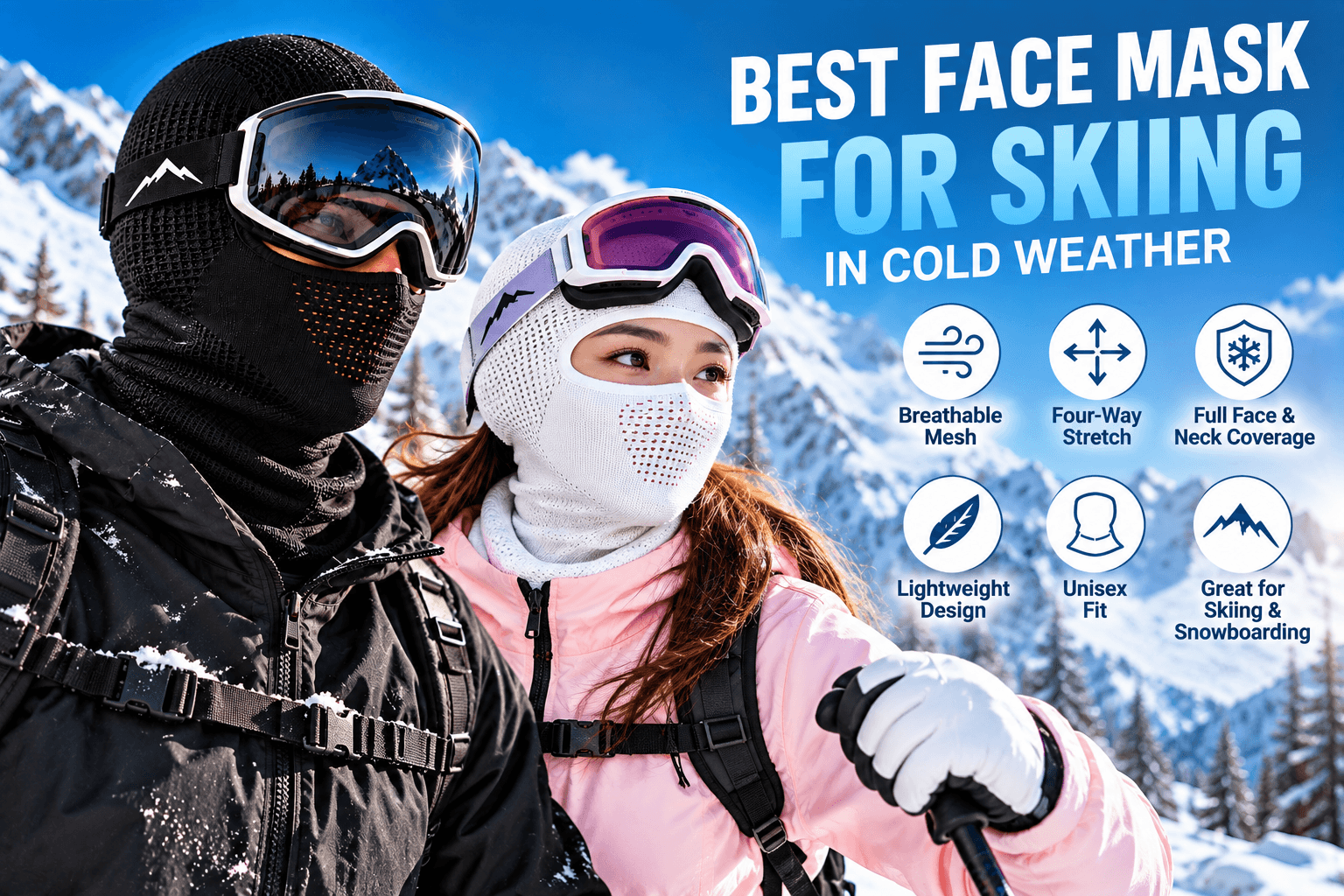
Best Face Mask for Skiing in Cold Weather: Breathable Ski Balaclava
When you’re skiing or snowboarding in cold weather, protecting your face and neck can make your outdoor experience more comfortable. A suitable face covering can provide additional coverage from cold air and snow while still allowing comfortable movement and breathing.
A ski face mask or balaclava is particularly useful when you want more coverage than a regular neck gaiter. Balaclavas can cover the face and neck while working alongside other winter gear such as helmets and goggles.
What to Look for in a Ski Face Mask
Breathable Material
Breathability is important when choosing a face mask for skiing. During active activities, heat and moisture can build up around the face. A mask with breathable areas around the nose and mouth can help provide more comfortable airflow.
It is also worth considering breathability when wearing goggles, since moisture around the face can contribute to fogging.
Comfortable Stretch Fabric
A ski mask should fit comfortably without feeling excessively tight. Stretch fabric can help the mask conform to the face and head while allowing freedom of movement.
Face and Neck Coverage
A full-face ski mask can provide more coverage than a simple neck gaiter. Extended neck coverage can also work well with jackets and other winter clothing.
Lightweight Design
If you’re skiing or snowboarding actively, a lightweight face covering can be more comfortable than a bulky winter mask.
Our Ski Face Mask for Cold Weather
Our Ski Face Mask for Cold Weather – Breathable Full Face Balaclava is designed for skiing, snowboarding and other winter outdoor activities.
It uses a nylon and spandex blend with four-way stretch and includes breathable mesh around the nose and mouth.
Key Features
- Breathable nose and mouth area – Mesh ventilation around the nose and mouth.
- Four-way stretch fabric – Flexible nylon and spandex material for a comfortable fit.
- Extended neck coverage – Provides additional coverage around the neck.
- Lightweight construction – Suitable for active outdoor activities.
- Full-face design – Covers the face and neck for additional cold-weather coverage.
- One-size design – Approx. 46–58 cm head circumference.
Product Specifications
| Feature | Details |
|---|---|
| Product Type | Full Face Ski Mask / Balaclava |
| Material | Nylon + Spandex |
| Size | One Size |
| Head Circumference | Approx. 46–58 cm |
| Length | Approx. 38.5 cm |
| Design | Full Face + Extended Neck |
| Suitable For | Skiing, Snowboarding & Winter Activities |
Is This Ski Face Mask Good for Snowboarding?
Yes, the design can also be used for snowboarding and other outdoor winter activities.
The lightweight stretch fabric and extended neck coverage make it suitable for activities where you want additional face and neck coverage without using a bulky covering.
When using a face covering with a helmet and goggles, check that everything fits comfortably together. Skiing and snowboarding gear should work together without interfering with your field of vision or comfort.
How to Choose the Right Ski Face Mask
Before purchasing a ski face mask, consider:
1. Weather conditions
Choose the amount of coverage and warmth appropriate for the conditions you’ll be outdoors in.
2. Breathability
Look for ventilation around the nose and mouth, especially if you’ll be physically active.
3. Fit
The mask should stay comfortably in place without being excessively tight.
4. Coverage
Consider whether you want coverage around only your face or also your neck and head.
5. Compatibility with winter gear
Make sure the mask works comfortably with your helmet, goggles and jacket.
Ski Face Mask vs. Neck Gaiter
A neck gaiter primarily provides coverage around the neck and can be pulled upward over the lower face.
A balaclava generally provides more coverage around the head, face and neck. For skiing in colder conditions, someone who wants greater coverage may prefer a balaclava-style design.
Frequently Asked Questions
What is the best face mask for skiing in cold weather?
The right face mask depends on the weather, activity level, desired coverage and personal fit. For active winter activities, a lightweight and breathable design can be a practical option.
Can I use a ski face mask for snowboarding?
Yes. Ski face masks can also be used for snowboarding, cycling and other outdoor winter activities.
What material is good for a ski face mask?
Common materials include nylon, polyester, spandex and fleece. The right choice depends on the balance of stretch, breathability, warmth and coverage you want.
Should a ski mask be tight?
A ski mask should fit securely without being uncomfortably tight. A good fit helps keep the covering in place while allowing comfortable movement and breathing.
Final Thoughts
A good ski face mask should provide the coverage you need while remaining comfortable during outdoor activity. Breathability, stretch, fit and neck coverage are important factors to consider when choosing a winter face covering.
Our Ski Face Mask for Cold Weather combines a lightweight nylon-spandex fabric, breathable mesh around the nose and mouth, four-way stretch and extended neck coverage in a simple full-face design.
Ready for your next winter adventure?



Add comment